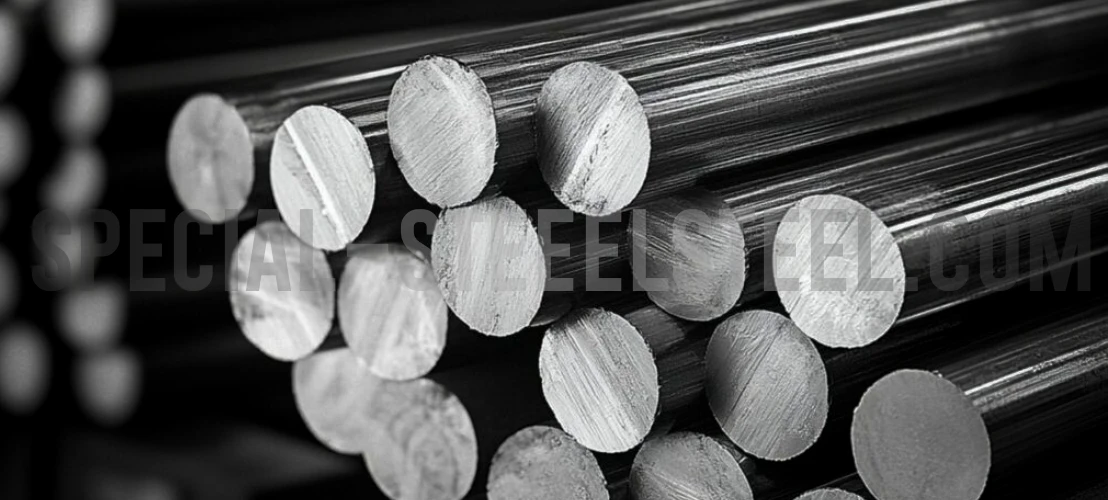
1.4418 Stainless Steel properties applications equivalents ultimate guide

Dr. Robert Anderson
Senior Materials Scientist
1.4418 Stainless Steel: Ultimate Guide to Properties, Applications & Equivalents
If you’re in the market for a high-strength stainless steel that doesn’t compromise on corrosion resistance or weldability, 1.4418 (also known as X4CrNiMo16-5-1) is a top contender. This low-carbon martensitic alloy has become a staple in demanding industries like oil and gas, marine engineering, and hydropower—thanks to its unique combination of mechanical performance and environmental durability. In this comprehensive guide, we’ll break down everything you need to know about 1.4418 stainless steel, from its chemical composition and key properties to real-world applications and equivalent grades.
What is 1.4418 Stainless Steel?
1.4418 is a low-carbon martensitic chromium-nickel-molybdenum stainless steel defined by European standard EN 10088-3. Unlike traditional martensitic steels (such as AISI 410), its optimized chemical composition—low carbon content and enhanced alloying with nickel and molybdenum—delivers superior toughness, weldability, and corrosion resistance. The alloy’s microstructure after quenching and tempering (QT) consists of tempered martensite, small amounts of stable austenite, and trace ferrite, which contributes to its balanced performance.
Key identifiers: It’s magnetizable (a hallmark of martensitic stainless steels) and is commonly supplied in QT760 or QT900 tempered conditions for high-strength applications. It’s also known by trade names like S165M (UK) and SS2387 (Sweden), making it recognizable across global markets.
1.4418 Stainless Steel Chemical Composition
The chemical makeup of 1.4418 is what sets it apart from standard martensitic steels. Here’s the breakdown (by weight percentage) per EN standards:
-
Carbon ©: ≤ 0.06% – Low carbon content prevents weld embrittlement and improves toughness.
-
Chromium (Cr): 15.0–17.0% – Forms a protective oxide layer for basic corrosion resistance.
-
Nickel (Ni): 4.0–6.0% – Stabilizes austenite, boosting low-temperature toughness and ductility.
-
Molybdenum (Mo): 0.8–1.5% – Enhances resistance to pitting and crevice corrosion, especially in chloride environments like seawater.
-
Manganese (Mn): ≤ 1.5%
-
Silicon (Si): ≤ 0.7%
-
Phosphorus (P): ≤ 0.04%
-
Sulfur (S): ≤ 0.03%
-
Nitrogen (N): ≥ 0.02% – Aids in strength reinforcement and austenite stabilization.
Key Properties of 1.4418 Stainless Steel
1.4418’s claim to fame is its balance of strength, toughness, and corrosion resistance. Below are the critical properties (typical values for QT900 tempered condition, the most common supply state):
Mechanical Properties
-
Tensile Strength (Rm): 900–1150 MPa – Ideal for high-load applications like shafts and valves.
-
Yield Strength (Rp0.2): ≥ 700 MPa – Ensures excellent load-bearing capacity without permanent deformation.
-
Elongation (A): ≥ 10–16% – Offers sufficient ductility for forming and machining.
-
Impact Energy (KV, 20°C): ≥ 60–80 J – Maintains toughness even at low temperatures (down to -20°C or lower).
-
Hardness (HB): 280–340 – Balances wear resistance and machinability.
Physical Properties (20°C)
-
Density: 7.70 g/cm³ – Slightly lighter than austenitic steels (e.g., 304, 316).
-
Melting Point: 1398–1454°C – Standard for martensitic stainless steels.
-
Thermal Conductivity: 15 W/m·K
-
Electrical Resistivity: 0.80 Ω·mm²/m
-
Magnetism: Ferromagnetic – Can be used in magnetic applications; easily identifiable with a magnet.
-
Operating Temperature Range: -30°C to 300°C – Performs reliably in both cold and moderate heat environments.
Corrosion Resistance
1.4418 outperforms most martensitic steels (like AISI 410) in corrosive environments. It excels in mild to moderate corrosive media, including:
-
Seawater (with proper design to avoid stagnant crevices).
-
Weak acids (organic and inorganic acids).
-
Salt solutions and chemical process streams.
Note: It is not suitable for strong oxidizing acids (e.g., concentrated nitric acid) or high-temperature (>300°C) corrosive environments, where its corrosion resistance diminishes.
Heat Treatment for 1.4418 Stainless Steel
Heat treatment is critical to unlocking 1.4418’s full potential. The most common processes are:
-
Annealing: For softening and stress relief. Heat to 800–900°C, hold, then furnace-cool slowly. Results in a ferrite-carbide microstructure for easy machining.
-
Quenching + Tempering (QT): The core process for high strength:
-
Quenching: Heat to 1000–1050°C, hold, then oil-quench or polymer-quench (air-cool for thin parts) to form martensite.
-
Tempering: For QT900, temper at 550–620°C for 8+ hours, then air-cool. This produces stable tempered martensite with optimal strength and toughness.
For lower strength (QT760) applications, temper at 580°C to prioritize toughness over maximum strength.
Processing & Welding of 1.4418 Stainless Steel
1.4418 is relatively easy to process compared to high-carbon martensitic steels, thanks to its low carbon content and alloying additions.
Machining
Annealed 1.4418 has good machinability (rated 4/10, where 10 is excellent) and can be machined with standard practices for medium-carbon steels. For QT-tempered material (harder), use carbide tools and reduce cutting speeds to avoid tool wear.
Welding
1.4418 is weldable using standard methods like TIG (GTAW) and MIG (GMAW). Key welding tips:
-
Use matching filler metals (e.g., ER410NiMo) to maintain corrosion resistance and strength.
-
Preheating (150–200°C) is only needed for thick sections or high拘束ity structures.
-
Post-weld tempering (600–650°C) is recommended to eliminate residual stresses and restore toughness.
-
Avoid oxyacetylene welding, as it can introduce excess carbon and degrade properties.
Hot & Cold Working
Hot working: Optimal temperature range is 1150–1180°C, with a minimum finish-forging temperature of 950°C. Cool slowly after hot working to prevent cracking. Cold working: Possible in the annealed state (e.g., bending, cold drawing), but avoid excessive deformation in QT-tempered condition.
1.4418 Stainless Steel Equivalent Grades
If 1.4418 isn’t readily available in your region, these equivalent grades can be used (note: some are “close matches” rather than exact equivalents):
-
European: X4CrNiMo16-5-1 (EN), Z6CND16-05-01 (AFNOR, France), Z8CND17-04 (AFNOR)
-
US: UNS S41500 (AISI 415), AISI S165M – Close matches, not exact.
-
Japan: SUS F6NM (JIS)
-
China: 0Cr16Ni5Mo (GB/T)
Applications of 1.4418 Stainless Steel
1.4418’s versatility makes it a favorite across multiple industries. Here are its most common uses:
Oil & Gas Industry
Wellhead equipment, valves, fittings, and drill components—thanks to its high strength and resistance to油气 media.
Marine & Shipbuilding
Propeller shafts, ship hull components, and seawater handling systems—excels in chloride-rich environments.
Hydropower & Energy
Water turbine parts, pump shafts, and hydroelectric plant components—handles high loads and freshwater/seawater exposure.
Chemical & Pharmaceutical
Reactors, heat exchangers, and process piping—resists weak acids and chemical process streams.
Mechanical Engineering
Shafts, gears, bolts, shear pins, and piston rods—ideal for high-torque and high-wear applications.
Aerospace & Automotive
Fuel injector bodies, high-pressure components, and aircraft/motor vehicle parts—benefits from its high strength-to-weight ratio.
1.4418 vs. AISI 410: Why Choose 1.4418?
A common question is how 1.4418 compares to AISI 410, a standard martensitic steel. Here’s the key difference:
AISI 410 has lower chromium (11.5–13.5%) and no nickel/molybdenum, making it less corrosion-resistant—especially in chlorides. 1.4418, with its higher Cr, Ni, and Mo content, offers superior corrosion resistance, better toughness, and improved weldability. While AISI 410 is cheaper, 1.4418 is worth the investment for harsh or high-performance environments.
Tips for Buying 1.4418 Stainless Steel
When sourcing 1.4418, keep these tips in mind:
-
Request EN 10204 3.1 certification to verify chemical composition and mechanical properties.
-
Specify the tempering condition (QT760 or QT900) based on your strength requirements.
-
For seawater applications, ensure the supplier uses vacuum melting (VIM/VAR) to reduce inclusions and improve corrosion resistance.
-
Check availability: 1.4418 is commonly supplied as round bars (12–460 mm diameter), but plates and pipes can be custom-ordered.
Final Thoughts on 1.4418 Stainless Steel
1.4418 (X4CrNiMo16-5-1) is a high-performance martensitic stainless steel that bridges the gap between strength and corrosion resistance. Its low carbon content, alloying additions, and versatile processing make it ideal for demanding industries like oil and gas, marine, and energy. Whether you need a shaft for a hydroelectric turbine or a valve for an offshore platform, 1.4418 delivers reliability and durability.
If you have questions about 1.4418’s suitability for your project, feel free to leave a comment below!